 English
 Español
 Português
 русский
 Français
 日本語
日本語 Deutsch
 tiếng Việt
 Italiano
 Nederlands
 ภาษาไทย
 Polski
 한국어
한국어 Svenska
 magyar
 Malay
Malay বাংলা ভাষার
 Dansk
Dansk Suomi
Suomi हिन्दी
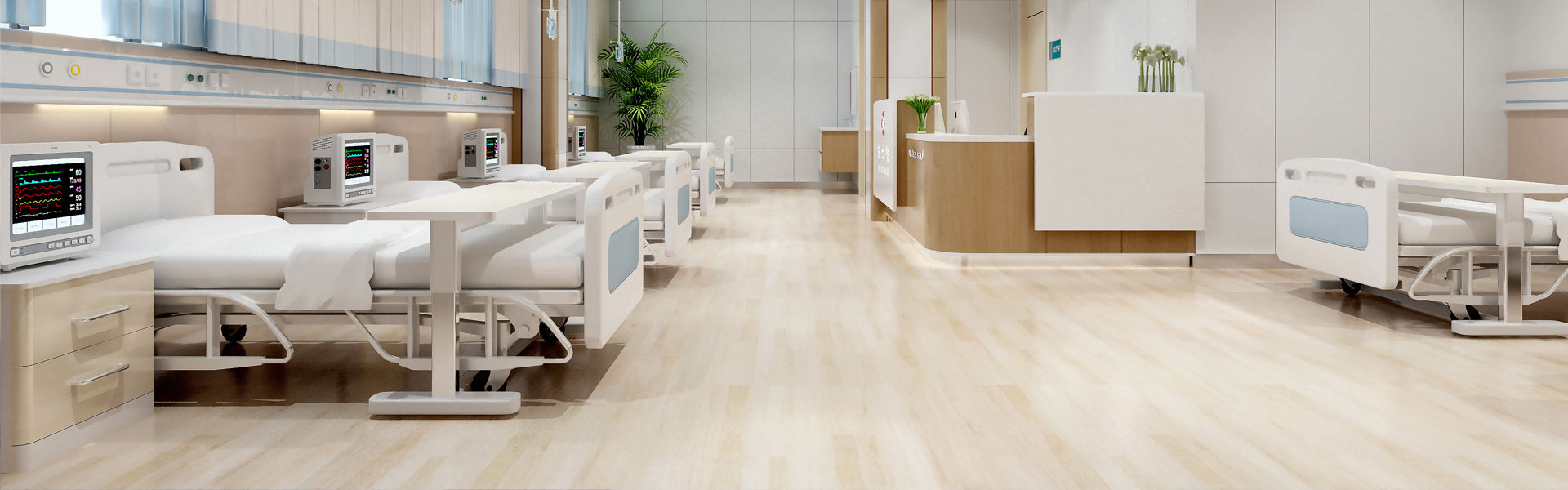
Why Choose a 2.46-Inch IPS Display for Compact Medical and Industrial Devices?
Picture the late stages of hardware prototyping for a new handheld pulse oximeter or a portable vibration analyzer. The enclosure dimensions are locked. The battery takes up half the internal volume. You need a user interface capable of plotting real-time waveforms and displaying crisp, color-coded alerts. A standard 3.5-inch panel forces the device width past ergonomic limits, making it impossible to operate with one hand. A tiny 1.54-inch wearable display fits the footprint, but leaves critical data cramped and unreadable at arm's length.
Hardware teams constantly fight this battle between screen real estate and device footprint. The 2.46-inch form factor bridges this exact gap. It provides enough vertical space for complex data visualization while keeping the overall product narrow enough for a comfortable grip.
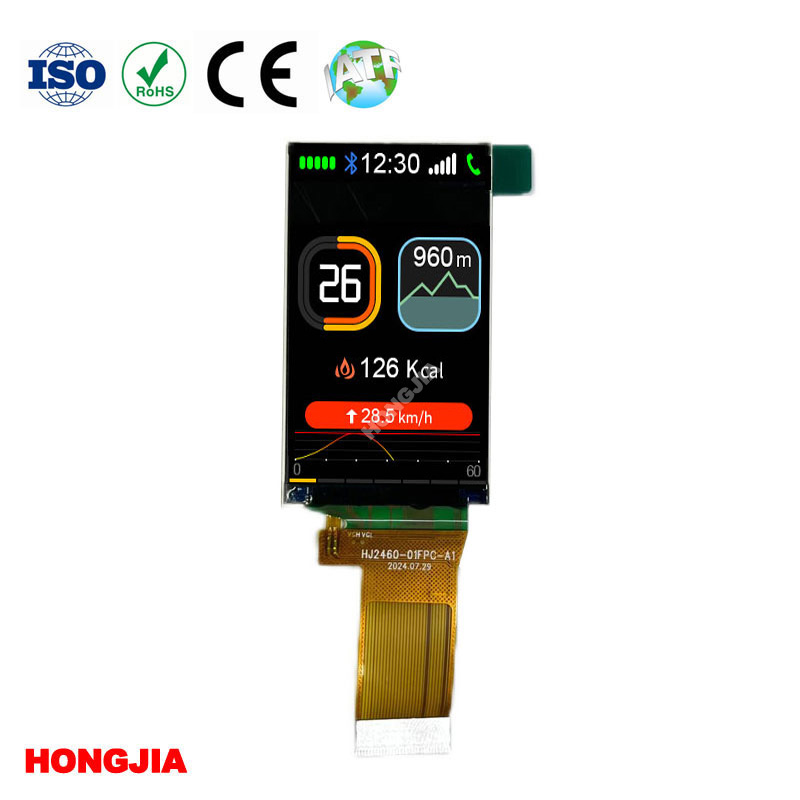
Balancing Screen Real Estate and Device Footprint in Handheld Designs
The primary advantage of the 2.46-inch display size is its aspect ratio. At 272x480 pixels, a 2.46-inch TFT LCD module defaults to a portrait orientation. This matches the natural way humans hold instrumentation. You get a tall canvas that allows designers to stack information hierarchically: numerical readouts at the top, a moving waveform in the middle, and soft-key menus at the bottom.
Pixel density is another critical factor. A 272x480 resolution on a 2.46-inch diagonal yields a highly dense image. Text renders with sharp edges, eliminating the jagged pixelation that makes older industrial meters look cheap. Curved lines in diagnostic graphs appear smooth.
But resolution alone does not guarantee a usable instrument. The underlying panel technology dictates how the screen performs in the real world. Older TN (Twisted Nematic) panels suffer from severe color inversion at specific viewing angles. If you tilt a TN screen away from you, the contrast drops to zero, and the colors flip—reds look black, whites look grey. In-Plane Switching (IPS) technology solves this. A 2.46 inch IPS Display 272x480 maintains consistent color fidelity and high contrast across nearly 180 degrees of viewing. When a nurse checks a monitor resting flat on a bedside table, or a technician glances at a meter clipped to a belt, the information remains perfectly legible without requiring them to pick up the device and face it dead-center.
Driving the Module: SPI Initialization and 16-Bit RGB Interface Efficiency
Integrating a display requires understanding how the host microcontroller (MCU) will communicate with it. The HONGJIA HJ2460-01 utilizes a specific hybrid communication strategy managed by the ST7365 driver IC. It relies on an SPI connection for initialization and a 16-bit RGB interface for the actual pixel data.
This split architecture is highly efficient for specific use cases. The SPI bus handles the setup commands. At boot, the MCU sends a few bytes over SPI to configure the display's gamma curves, power settings, and frame rate. Because SPI uses very few pins, this keeps routing simple for the control signals.
Once initialized, the heavy lifting shifts to the 16-bit RGB interface. Unlike SPI or MCU interfaces that write data into the display's internal memory (GRAM), a pure RGB interface requires the host processor to continuously stream pixel data, clocked by HSYNC, VSYNC, and DOTCLK signals. This direct-drive approach bypasses internal bottlenecks, allowing for high-speed frame rates. If your device needs to display a rapidly moving plethysmograph on a medical monitor or a high-frequency FFT graph on an industrial tool, the RGB interface ensures smooth, tear-free motion.
This architecture does come with strict hardware trade-offs. Because the ST7365 in this configuration lacks an internal frame buffer, your host MCU must maintain the entire 272x480 image in its own RAM and feature a dedicated LCD controller (like the LTDC found on higher-end STM32 chips). You cannot drive this specific module with a basic 8-bit microcontroller. Engineering teams must verify their processor has the memory bandwidth and the correct peripheral to sustain the RGB pixel clock before committing to the design.
Display Reliability in Extreme Temperatures and Regulated Environments
Consumer-grade screens fail in professional environments. The liquid crystal fluid inside a display responds poorly to thermal extremes, becoming sluggish in the cold and turning completely black when overheated. HONGJIA manufactures these panels with industrial and medical realities in mind, focusing on wide-temperature operation and strict quality controls.
Medical Diagnostics and Oximetry
In medical settings, a display failure is a patient safety issue. Handheld pulse oximeters, portable capnographs, and infusion pump interfaces rely on absolute color accuracy. Medical UI design heavily utilizes color coding—red for critical alarms, yellow for warnings, green for normal operation. If a cheap display washes out these colors under harsh hospital fluorescent lighting, a clinician might miss a critical alert.
Furthermore, medical devices are subject to intense regulatory scrutiny. HONGJIA's status as an ISO13485 certified manufacturer means their production processes meet the strict traceability requirements demanded by the FDA and the MDR in Europe. If you specify a medical grade 2.46 inch IPS screen, you ensure that the components, assembly procedures, and quality checks are documented and auditable, simplifying the certification process for the final medical device.
Industrial Field Instrumentation
Industrial handheld testers face a different set of abuses. A technician might leave a gas detector on the dashboard of a truck in the summer sun, or use a cable tester outdoors in freezing rain. Standard displays are typically rated for 0°C to 50°C. Industrial-grade modules push this operating window significantly wider, ensuring the screen updates quickly in sub-zero conditions and resists solar clearing in high heat.
IPS panels also offer a physical advantage in rugged environments. Traditional TN panels are highly sensitive to pressure; pressing a finger against the screen causes the liquid crystals to displace, creating a temporary rippling or "pooling" effect. IPS panels have a much harder internal structure, making them highly resistant to touch pressure. This structural integrity is vital when pairing the display with a thick, ruggedized cover glass for drop resistance.
Adapting the FPC, Backlight, and Touch Interface to Custom Enclosures
Off-the-shelf displays rarely fit perfectly into highly optimized hardware. The physical connection between the display and the main PCB is often the biggest mechanical headache. The Flexible Printed Circuit (FPC) tail on a standard module might be too short, too long, or exit from the wrong side of the glass, forcing engineers to use bulky extension cables or redesign their entire board layout.
HONGJIA addresses this through extensive in-house customization. Hardware teams can specify the exact length, bend radius, and pinout of the FPC. If you need the cable to fold 180 degrees to connect to a board mounted directly behind the screen, the FPC can be manufactured with specific stiffeners and EMI shielding to accommodate that bend without risking micro-fractures in the copper traces.
Backlight architecture is equally adjustable. A standard indoor display might output 300 nits of brightness. If your industrial meter will be used in direct sunlight, the backlight can be customized with high-efficiency LEDs and specialized enhancement films to push the brightness well over 800 nits, ensuring readability outdoors. This requires careful thermal management and power budgeting, as a brighter backlight draws significantly more current from a portable battery.
Finally, the touch interface can be tailored to the environment. While the base HJ2460-01 is a non-touch module, it is frequently paired with a custom Capacitive Touch Panel (CTP). By tuning the I2C touch controller, the screen can be configured to register inputs through thick nitrile medical gloves or reject false touches caused by water droplets in outdoor industrial settings.
Securing Supply Chain Stability for Multi-Year Manufacturing Programs
The most expensive mistake a hardware team can make is designing a product around a display that goes End of Life (EOL) a year after launch. In the consumer electronics sector, screens are discontinued constantly as smartphone sizes change. For B2B clients, this is catastrophic. If the display in an FDA-approved medical device or a certified intrinsically safe industrial meter is discontinued, the manufacturer must find a replacement, modify their PCB, rewrite firmware, and potentially repeat the entire regulatory certification process—a delay that costs hundreds of thousands of dollars.
HONGJIA focuses specifically on long-term supply stability for B2B sectors. By controlling their own automated manufacturing facilities, they isolate their clients from the volatility of the consumer display market. When you integrate their 2.46-inch IPS module into a product with a ten-year lifecycle, you secure a reliable supply chain for the duration of that run.
Evaluating this form factor starts with verifying the electrical fit and the visual performance under your specific lighting conditions. To review the ST7365 initialization code, check the exact mechanical tolerances, and determine if this module suits your next handheld design, review the full technical specifications for the HJ2460-01 display module.
Send Inquiry


X
We use cookies to offer you a better browsing experience, analyze site traffic and personalize content. By using this site, you agree to our use of cookies.
Privacy Policy