 English
 Español
 Português
 русский
 Français
 日本語
 Deutsch
 tiếng Việt
 Italiano
 Nederlands
 ภาษาไทย
 Polski
 한국어
 Svenska
 magyar
 Malay
 বাংলা ভাষার
 Dansk
 Suomi
 हिन्दी

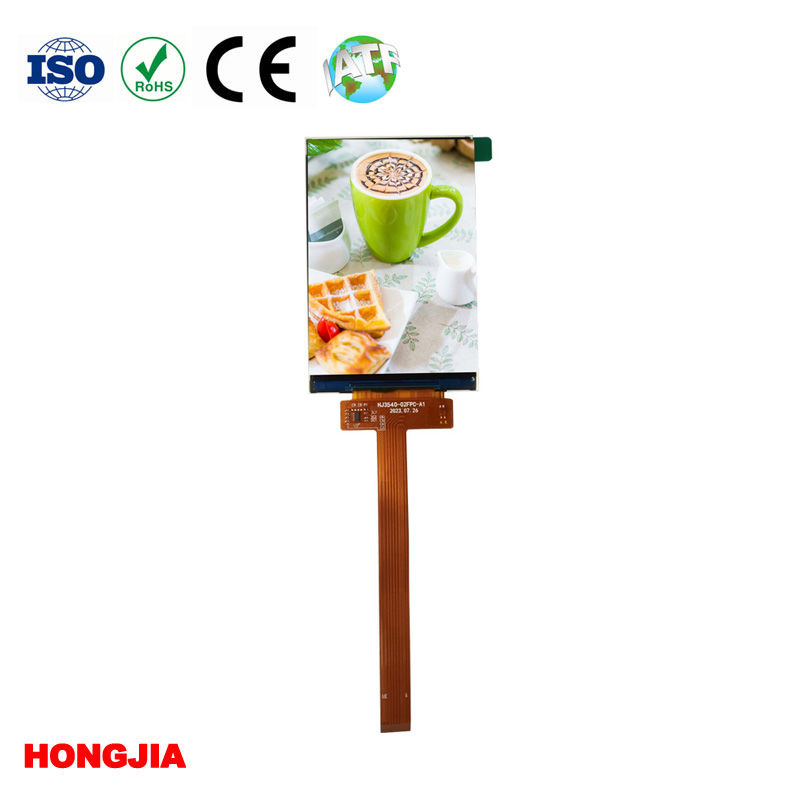
3.5-Inch 640×960 IPS TFT LCD Module for Compact Portrait Devices
Direct answer: HONGJIA’s 3.5-inch 640×960 IPS TFT LCD module is a transmissive portrait display with a MIPI interface, ST7703 driver IC, 31-pin connection, white LED backlight, and all-direction viewing. Its resolution and narrow portrait format make it a candidate for compact handheld controls, instruments, communication devices, and other interfaces that need more vertical content than a conventional low-resolution 3.5-inch panel can show.
That configuration is only the starting point. Before you route a PCB or approve an enclosure, confirm the controlled pinout, MIPI implementation, initialization sequence, mechanical drawing, brightness, temperature limits, and backlight requirements for the exact revision being quoted.
Published Module Configuration at a Glance
Confirmed specifications: transmissive IPS, 640×960 resolution, MIPI interface, ST7703 driver IC, 31 pins, all-direction viewing, and white LED backlight
| Published item | Design implication |
|---|---|
| 3.5-inch transmissive IPS TFT | The image depends on the backlight. Do not assume transflective behavior or direct-sunlight readability. |
| 640×960 pixels | The native format is portrait. Landscape use requires system-level rotation and a mechanical layout that accommodates the module orientation. |
| MIPI interface | Your processor and PCB must support the documented MIPI implementation and electrical requirements. |
| ST7703 driver IC | Firmware initialization, timing, and power sequencing must match the supplied panel revision. |
| 31 pins | Pin count alone does not define the connector, FPC pitch, contact orientation, or signal assignment. |
| All-direction viewing | This describes the published viewing characteristic; it does not mean color and luminance remain identical at every angle. |
| White LED backlight | Confirm the backlight electrical specification and driver arrangement before finalizing the power design. |
If your BOM describes the part as a “3.5 inch TFT LCD Module 640*960,” normalize the notation to 640×960 and tie the line item to a drawing and revision. Search wording is not a safe purchasing specification.
Treat conflicting RGB or NV3052C references as unconfirmed unless supported by the controlled datasheet
Interface and driver IC conflicts can produce a board that cannot operate the delivered display. The published 3.5-inch MIPI LCD configuration identifies MIPI and ST7703. If another listing, file, or message mentions RGB or NV3052C, ask HONGJIA to resolve the discrepancy in writing and issue the applicable datasheet. Do not combine specifications from similar-looking modules; glass size and resolution do not establish electrical interchangeability.
Confirm Host Compatibility Before Starting the PCB Design
Request the pinout, MIPI electrical requirements, initialization code, timing data, power sequence, and FPC or connector details
A processor with a MIPI-capable peripheral is not automatically compatible. The controlled technical package should identify the required interface configuration, signal assignments, supply rails, voltage limits, reset behavior, timing, and startup or shutdown order. Ask for initialization code matched to the ST7703 panel setup rather than relying on a generic online sequence.
Check the 31-pin FPC against your chosen connector. Pitch, exposed-contact side, insertion direction, stiffener thickness, and pin-one orientation affect both PCB placement and assembly. A mirrored connector footprint is a common prototype failure, and it may not become obvious until the first display is powered.
- Confirm that the host can output the native 640×960 format with the documented timing.
- Review signal integrity and routing requirements with your PCB engineer.
- Verify backlight drive separately from display logic power.
- Keep the approved initialization file under revision control with the datasheet.
Check Mechanical Fit, Brightness, and Environmental Limits Against the Final Assembly
Verify the active area, outline dimensions, viewing area, mounting clearances, luminance option, and published operating-temperature range in controlled drawings
The 3.5-inch diagonal does not tell you the glass outline, active-area position, FPC exit, or bezel opening. Use the dimensional drawing to check enclosure ribs, adhesive zones, connector access, bend radius, and clearance around components on the flex. Compare the active area with the product’s visible window; centering the module by its outer glass can leave the image visibly offset.
Brightness also needs an application-level decision. Confirm the quoted luminance option and evaluate a sample behind the actual cover lens, touch panel, coating, and air gap. Each optical layer can reduce perceived brightness or add reflections. A standard transmissive module may be suitable indoors yet unsatisfactory in direct sun.
Use the published operating-temperature range, not a range copied from a neighboring product. Storage limits, humidity exposure, thermal cycling, and any required shock or vibration testing should also be agreed for the finished application. No automotive, medical, or other regulated qualification should be assumed from the display category alone.
Best-Fit Applications—and Requirements That Need Additional Validation
This portrait TFT is best considered where a compact interface needs dense menus, status graphics, text, or vertically arranged controls. Plausible uses include handheld devices, industrial instruments, communication equipment, smart-home controllers, POS equipment, appliance interfaces, and consumer electronics.
Some projects need more evidence before design-in:
- Medical equipment: define the required documentation, image consistency, cleaning exposure, and product-level regulatory obligations.
- Automotive electronic instruments: confirm temperature, vibration, lifetime, change-control, and qualification requirements. Do not treat general automotive use language as an automotive-grade certification.
- Outdoor products: validate sunlight readability, reflections, cover-lens performance, moisture protection, and backlight behavior at temperature.
- Continuous-operation equipment: discuss backlight lifetime, image retention risk, thermal management, and supply continuity for the expected service period.
The module is a poor default choice if your host lacks the required MIPI interface, the enclosure needs a landscape-native geometry, or the product requires transflective outdoor performance. Those are architecture issues, not details to fix after tooling.
Separate the Standard Module from Touch, FPC, Backlight, COG, and FOG Customization
Start by identifying what the standard quoted module includes. A bare display module, a display with a touch panel, and a bonded cover-lens assembly create different dimensions, optical results, tooling needs, and qualification work.
For touch customization, specify the required touch technology, visible area, cover-lens outline, thickness, surface treatment, controller preference, interface, operating environment, and bonding expectation. HONGJIA supplies touch LCD and CTP products, but compatibility and final construction still need written confirmation for this module.
FPC changes can address connector position, pin assignment, or mechanical routing, but they may add engineering charges, minimum quantities, and lead time. Backlight customization can alter brightness, power demand, heat, and lifetime. None of those should be treated as a cosmetic substitution.
COG bonding places the driver chip on the display glass. FOG bonding connects the flexible circuit to the glass assembly. If either process is part of a custom request, ask for the resulting drawing, materials, bonding controls, inspection criteria, and reliability evidence. Also separate prototype feasibility from production commitment: a sample can prove basic function, but it does not by itself establish long-term availability or repeatable mass-production terms.
Request Design-In Evidence, Samples, and a Production-Ready Quote from HONGJIA
A useful RFQ gives the supplier enough information to identify technical and commercial gaps before samples ship. Include:
- Application and expected operating environment
- Host processor or display interface platform
- Required sample quantity and project schedule
- Prototype, pilot, and estimated production volumes
- Mechanical drawing or available enclosure space
- Brightness, temperature, touch, cover-lens, FPC, and backlight requirements
- Destination, documentation needs, and requested supply period
Ask HONGJIA to return the controlled datasheet, dimensional drawing, pin definition, interface data, initialization code, sample lead time, quotation basis, and applicable revision. For production planning, also request written terms covering change notification, end-of-life notice, minimum order quantities, and long-term supply expectations.
Review the HONGJIA 3.5-inch 640×960 TFT LCD module and submit your design-in requirements. The most useful first response is not just a unit price; it is a matched technical package, sample plan, and quote tied to the same module revision.
Send Inquiry


X
We use cookies to offer you a better browsing experience, analyze site traffic and personalize content. By using this site, you agree to our use of cookies.
Privacy Policy